
Shaking garage doors typically result from malfunctioning pulleys, damaged rollers, or worn springs that throw the elevator system out of balance. Older setups exposed to moisture and temperature swings, common across Merced’s Central Valley climate, wear down faster. Precision Garage Door Service diagnoses the root cause and restores smooth, quiet oper
What’s Causing Your Garage Door To Shake?
Several mechanical failures explain why a garage door shakes when opening: worn rollers, loose hardware, misaligned tracks, and imbalanced springs all disrupt the smooth motion a garage door should have. Sudden, uneven movement signals that something in the system isn’t working correctly, and a smooth elevator should feel effortless rather than jerky. Precision Door of Merced, serving homeowners throughout Merced, CA, helps diagnose these problems before they turn into bigger repairs.
Homeowners searching why is my garage door shaking usually find one of a few culprits at play. Common causes include:
- Garage door track misalignment, which forces rollers to fight against a crooked path
- Damaged or worn rollers that no longer glide smoothly through the track
- Loose bolts, hinges, or brackets that let hardware rattle during operation
- Imbalanced springs or frayed cables that throw off the door’s weight distribution
- Garage door opener shaking due to worn drive components or a misaligned trolley
A door producing odd noises or failing to move as expected is rarely a minor annoyance. Noise and shaking often point to a deeper mechanical issue. That issue can carry real safety risk for anyone standing nearby.
Why Does My Garage Door Jerk When Opening?
A garage door jerks when opening when parts inside the system are out of balance, worn down, or misaligned. That jerking motion is a warning sign, not something to ignore. Left unaddressed, the strain accelerates wear on rollers, cables, and the opener itself.
Is a Shaking Garage Door Dangerous?
Yes. A shaking or noisy door can indicate spring or cable failure, both of which carry serious safety concerns. Professional evaluation identifies the root cause and determines whether garage door roller replacement or another repair resolves the shaking safely.
Why Does A Garage Door Jerk When Opening?
Malfunctioning pulleys, damaged rollers, or worn springs rank among the most common triggers behind a garage door jerks when opening situation. Multiple components work together to elevate a garage door smoothly. When even one part fails, the whole system moves unevenly. A homeowner who understands the usual suspects can describe the problem accurately when calling for service, which speeds up diagnosis and repair.
Several components contribute to jerky movement and unwanted noise. Springs and hinges rank high on that list. These parts bear constant tension every time the door opens or closes. Over time, wear takes its toll: springs weaken, hinges loosen, and the mechanical balance that once made lifting effortless disappears.
What Parts Typically Cause The Jerking?
Springs and hinges top the list of usual culprits. Both parts endure repeated stress with every door cycle. Pulleys and rollers also play a big role. The table below breaks down how these components tend to fail over time.
Does Lack Of Maintenance Make Jerking Worse?
Yes. A garage door that hasn’t received regular upkeep is more likely to need part replacement than a simple repair. Neglected springs and hinges degrade faster, turning a minor adjustment into a bigger job later.
Homeowners who notice a garage door shake when opening shouldn’t dismiss the symptom as minor. Left unaddressed, worn springs or damaged rollers can escalate into a full system failure, leaving the door stuck open, closed, or moving dangerously off its track. A professional inspection identifies the failed part, allowing targeted repair, replacement, or installation instead of guesswork.
How Do You Check For Track Misalignment?
A visual inspection reveals most track problems within minutes. Two areas deserve close attention: the rollers riding inside the track and the opener’s position. Skipping this check can turn a minor wobble into a stuck door or a costly roller replacement down the road.
What Should the Rollers and Track Look Like?
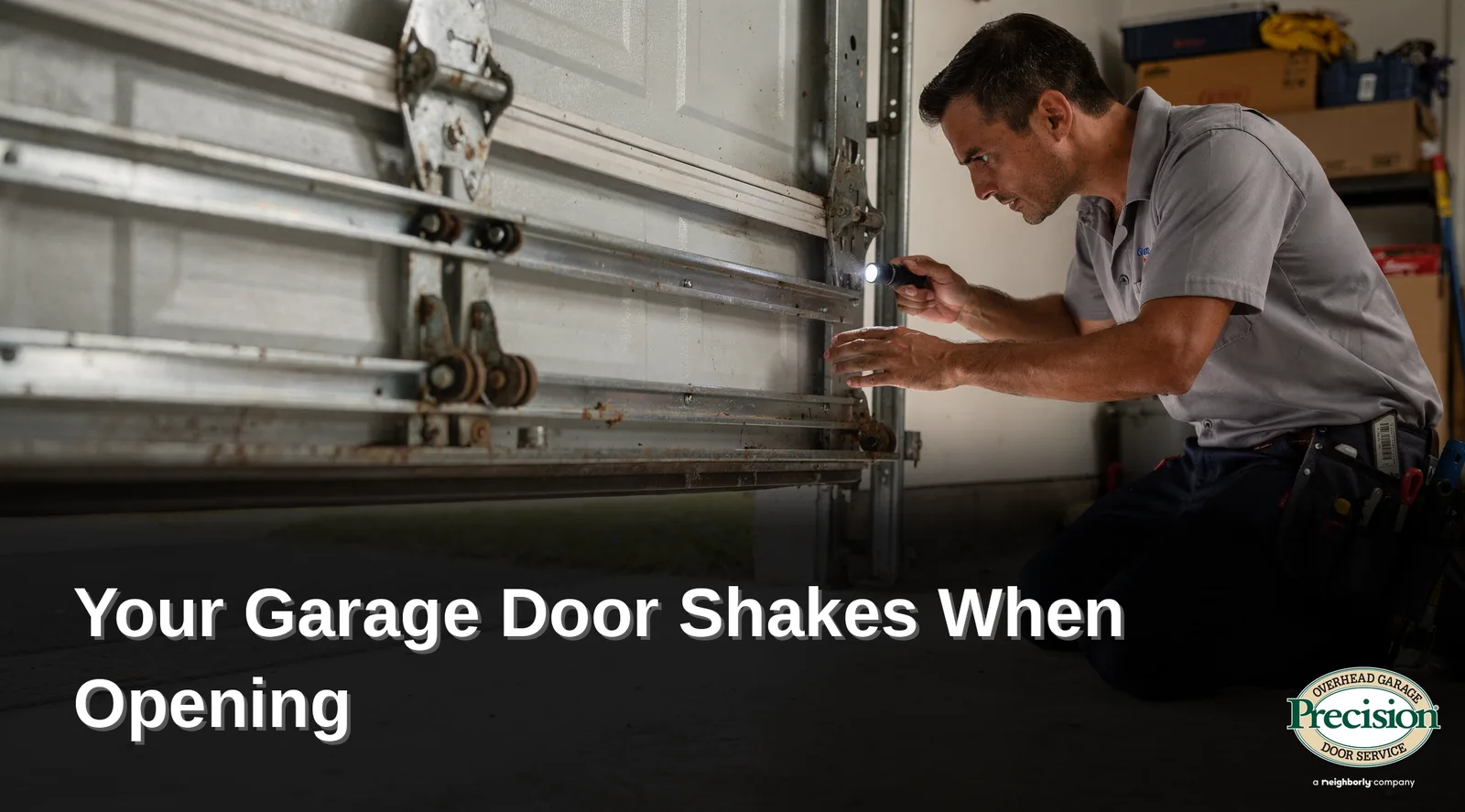
Round rollers with no apartment spots indicate healthy hardware. A flattened edge signals wear that throws the door off balance. The track itself should run straight from top to bottom with no dents, gaps, or bent sections. Garage door track misalignment often starts small, so catching a slight bow or separation early prevents bigger issues later.
Is the Opener Positioned Correctly?
An opener that sits off-center or fails to line up perpendicular to the door creates uneven pulling force, a common cause of garage door opener shaking. Even a door with straight tracks. Round rollers can jerk or bounce if the opener arm pulls at an angle instead of straight up.
Follow these steps to check for misalignment before calling in a professional:
- Disconnect the opener and manually raise and lower the door, watching for smooth, even movement.
- Inspect each roller along the track for apartment spots, cracks, or uneven wear.
- Run a hand along the track’s length, checking for dents, bends, or sections that pull away from the wall.
- Stand back and confirm the opener sits centered and perpendicular to the door, not angled to one side.
- Reconnect the opener and operate the door again, noting whether the shaking, jerking, or bouncing continues.
If the door still shakes when opening after these checks, it likely has a deeper spring, cable, or pulley issue. Homeowners noticing why their garage door shaking persists despite straight tracks. Round rollers should be treated as a signal to schedule a professional inspection rather than keep operating the door. Doors installed correctly from the start by trained professionals tend to stay aligned longer, sparing homeowners this troubleshooting altogether.
When Should You Replace Rollers Or Call A Pro?
Replace rollers when a garage door has gone without proper maintenance and worn parts start affecting smooth operation. Skipping this step can lead to a system that jerks, bounces, or drifts off track, turning a small fix into a costly repair down the line. Homeowners who notice grinding, cracking, or visible wear on the rollers face a clear signal that garage door roller replacement should happen before the door sees further use.
Worn or damaged rollers call for immediate action rather than a wait-and-see approach. The safest response is to pause door use and schedule an inspection right away, since continued operation on compromised rollers strains the track and opener alike. A stalled or hesitant opener often points to the same root cause. garage door opener shaking during a cycle rarely resolves on its own.
Can Homeowners Replace Rollers Themselves?
Basic roller swaps sometimes fall within reach of a confident do-it-yourselfer. The process carries real risk given the tension involved in garage door systems. Misjudging spring tension or track alignment during a roller swap turns a simple task into a safety hazard. Calling a professional removes that guesswork and protects against injury.
How Does A Professional Decide Between Repair And Replacement?
A trained technician inspects rollers, tracks, and hardware together rather than treating each part in isolation. This full-system check catches secondary damage that a homeowner might miss.
Merced-area homeowners facing these warning signs have relied on Precision Garage Door Service’s technicians, whose reputation for dependable service and skilled workmanship has grown throughout the community for more than two decades. Signs that call for a professional visit include:
- Grinding, chipping, or flattened rollers
- Visible gaps or shifting along the track
- An opener that shakes, hesitates, or reverses mid-cycle
- Door movement that feels uneven side to side
Addressing these signs early protects the whole system from further strain.
What Mistakes Make Garage Door Shaking Worse?
Ignoring early warning signs is one of the most common mistakes homeowners make with a shaking garage door. Continuing to operate it despite jerking or vibrating can turn a small fix into a major repair, compromising home security and disrupting daily routines. A properly functioning garage door protects the home, adds curb appeal, and may support property value; letting shaking go unchecked puts all three at risk.
Is It Safe to Keep Using a Shaking Garage Door?
Continued use isn’t safe when the shaking stems from an imbalanced door, especially one with a spring or cable issue. This type of problem calls for stopping use of the door immediately and contacting a professional technician rather than attempting a DIY fix.
Other common mistakes include:
- Delaying a professional inspection after noticing jerking or shaking
- Overlooking spring or cable imbalance signs
- Assuming the noise will resolve on its own
- Skipping routine maintenance checks that catch problems early
Addressing shaking promptly protects both the household’s safety and the home’s long-term value.