
Why Does My Garage Door Close Then Open?
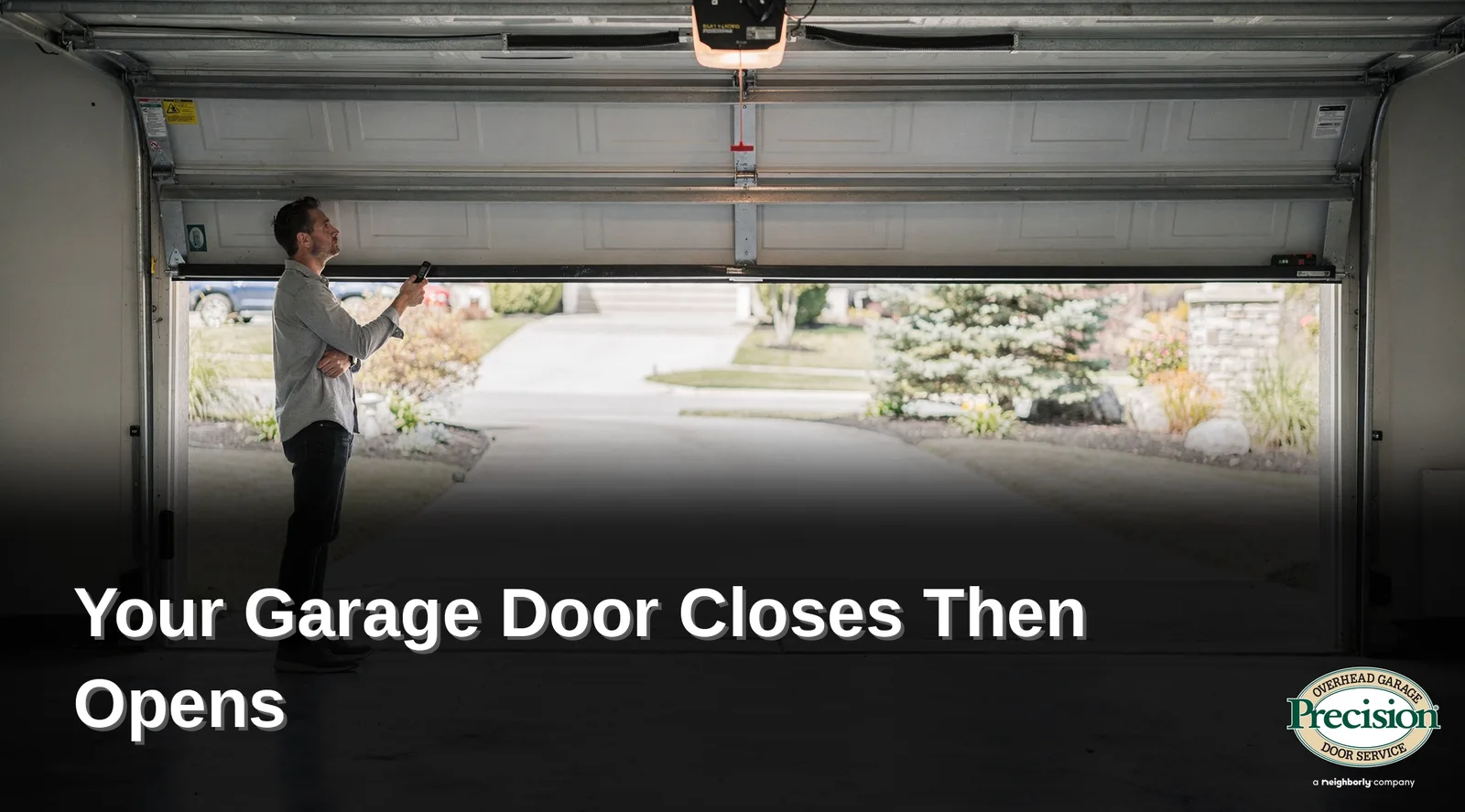
A garage door closes, then opens again for one main reason: a built-in safety mechanism senses something wrong and reverses the cycle before it finishes. This reaction, while frustrating for homeowners, protects people and property from a door that isn’t operating correctly. Several mechanical or electronic issues can trigger this response, and most follow recognizable patterns.
What Makes the Door Reverse Right After Hitting the Ground?
When a garage door reverses after hitting the floor, the behavior typically points to an underlying problem rather than a random glitch. Homeowners should treat this pattern as a signal, not a nuisance to ignore. Left unaddressed, the same mechanical fault tends to repeat with every cycle.
Is a Noisy, Erratic Door a Bigger Warning Sign?
Grinding, popping, or scraping sounds during operation often mean a more serious mechanical issue lies underneath. Erratic movement paired with unusual noise can also create a genuine safety risk for anyone standing nearby. This combination deserves prompt attention rather than a wait-and-see approach.
Common culprits behind this reversal pattern include:
- Garage door safety sensor misalignment, where the photo-eye sensors near the floor lose their aligned line of sight
- Incorrect garage door limit switch setting, causing the opener to misjudge when the door has fully closed
- A faulty garage door travel limit adjustment, which tells the system the door hit an obstruction too early
- Worn springs or cables straining the opener’s motor beyond its normal effort
Because these systems interact, a single misadjustment can mimic several different symptoms at once. When a door won’t complete its cycle despite basic checks, professional garage door repair Merced technicians can pinpoint the exact cause and correct it safely.
What Should You Check Before Calling for Help?
Homeowners facing a garage door that closes then opens back up issue should start with the opener button itself. This simple component causes many false alarms. Sticking or malfunctioning buttons rank as the first diagnostic checkpoint for this exact problem. Before working through any steps, homeowners need clear access to the wall-mounted control panel and the remote control units stored in vehicles or entryways.
- Inspect the wall button and remote control units for dirt, grime, or visible damage.
- Press each button firmly, then release it and watch whether it springs back cleanly.
- Swap the remote batteries to rule out a weak signal.
- Wipe the button surface with a dry cloth if you see buildup.
Old or dirty remote buttons stick easily. A stuck button sends repeated open and close signals to the door motor without any input from the homeowner. This single malfunction explains a surprising number of service calls before anyone even considers bigger issues like a garage door safety sensor misalignment or a faulty garage door limit switch setting.
Why does a garage door reverse right after hitting the floor?
A garage door most often reverses after hitting the floor because of sensor alignment or force-setting issues, not button trouble. This behavior signals the safety system reacting to what it reads as an obstruction, even when the floor sits completely clear.
If button checks show nothing, professional attention is the next step. A malfunctioning garage door becomes a real source of stress, compromising home security and disrupting daily routines for the whole household. Certified technicians handle a full spectrum of repair needs, from a precise garage door travel limit adjustment to major component replacement, making garage door repair Merced service the reliable next step once basic checks are exhausted.
How Do Limit Switches and Sensors Affect Reversal?
Limit switches and safety sensors control exactly where a garage door stops and whether it keeps closing at all. Misalignment or incorrect calibration in either part can explain why a garage door closes, then opens back up before finishing its cycle. Homeowners facing this pattern usually find the culprit in one of two places: the sensors near the floor or the switch telling the opener how far to travel.
One of the most frustrating issues homeowners face involves a door that reverses course right as it settles into place. The causes of a garage door reversing after hitting the floor vary widely: misaligned sensors, worn-out springs, and incorrect force settings can all produce the same frustrating symptom. Because several systems can trigger the same results, isolating the real cause takes a methodical check rather than guesswork.
A door most often reverses after touching the floor because the opener’s settings signal an obstruction, even when nothing blocks the path. This response is a built-in safety feature, not a random malfunction. Pinpointing which setting or sensor triggered it determines the right fix.
Before adjusting anything, homeowners should unplug the opener or switch off power at the wall unit, then lower the door fully. The following sequence helps narrow down the cause:
- Check both photo-eye sensors near the base of the tracks for dirt, cobwebs, or a tilted mount; slight misalignment can stop the cycle mid-motion.
- Clean the sensor lenses and confirm both LED indicators glow steadily instead of blinking.
- Locate the garage door limit switch setting, typically a small dial or screw on the motor housing, and compare it against the door’s actual travel distance.
- Adjust the garage door travel limit adjustment in small increments, testing a full cycle after each change.
- Examine springs and cables for wear, since a weakened spring throws off force calibration even with correct limit settings.
Getting a door installed correctly from the start prevents many of these limit and sensor problems from developing later. Homeowners seeking garage door repair in Merced turn to a team built on more than two decades of reliable service, honest pricing, and skilled workmanship throughout the community.
When Should You Call Precision Door of Merced?
A garage door closes, then opens again for reasons ranging from a simple sensor obstruction to a failing spring. Homeowners should call Precision Door of Merced once basic checks don’t solve the problem. Several components in a Merced garage door system, from springs to sensors, can cause a reversal issue, and pinpointing the exact culprit often takes trained eyes rather than guesswork.
Age plays a major role in these breakdowns. Over time, parts such as springs and hinges wear down or break, and that wear shows up as a door that won’t finish its cycle. A door that hasn’t received regular maintenance often needs worn components replaced to operate safely again.
Is a garage door that reverses after hitting the floor dangerous?
A garage door that reverses after hitting the floor isn’t reversing for convenience; it signals a genuine safety concern. This behavior isn’t random, and ignoring it risks a door that fails unpredictably during everyday use. Homeowners noticing this pattern should treat it as a signal to schedule service, not a quirk to work around.
What should homeowners check before calling for repair?
Before dialing in for help, a few quick checks can narrow down the issue:
- Inspect the photo-eye sensors for misalignment, since dirt or a bumped bracket can cause false reversals.
- Review the garage door limit switch setting, which controls where the door stops on its way down.
- Confirm the garage door travel limit adjustment hasn’t shifted, causing the door to reverse before reaching the floor.
- Schedule garage door repair Merced service if the door still won’t complete a full cycle after these checks.
How Can You Prevent Future Reversal Problems?
Prevention starts with routine attention to the garage door’s moving parts and settings. Homeowners who address small issues early avoid the frustration of a garage door that closes, then opens back up cycle down the road. A garage door ranks as a critical component of any home, delivering security, curb appeal, and resale value, which makes prompt attention to reversal issues a smart priority rather than an optional chore.
Regular upkeep protects more than convenience. Resolving the root cause behind a garage door reversal after hitting the floor pattern safeguards the home’s broader security. A safety system keeps the entryway reliable for years to come.
What Maintenance Steps Reduce the Risk of Reversal?
- Inspect the garage door safety sensor misalignment points near the base of the tracks for dust, dirt, or obstruction.
- Check the garage door limit switch setting periodically to confirm the door stops and reverses at the correct positions.
- Review the garage door travel limit adjustment after any seasonal temperature shift, since materials expand and contract.
- Schedule a professional inspection if grinding, jerking, or repeated reversal continues after basic checks.
When Should a Homeowner Call a Professional?
Persistent reversal after sensor cleaning and limit adjustments signals a deeper mechanical concern. Certified technicians handle every aspect of garage door repair Merced homeowners rely on, ensuring the system runs smoothly, safely, and quietly. Lasting peace of mind comes from trusting trained hands with the parts that keep a household secure.